Quick search
Type search term(s) for
articles, places or events,
then hit enter
Articles older than two
issues are available in our Archives back to 1990.
(free search and retrieval)
Interested in Advertising? Black Engineer provides black technology news and information about black engineering, black entrepreneurs, black technology, black engineers, black education, black minorities, black engineer of the year awards (BEYA) and historically black colleges and universities (HBCU) from black community in US, UK, Caribbean and Africa. Find out more about your reader demographics, web-traffic, and valued added client services. Click here to contact us
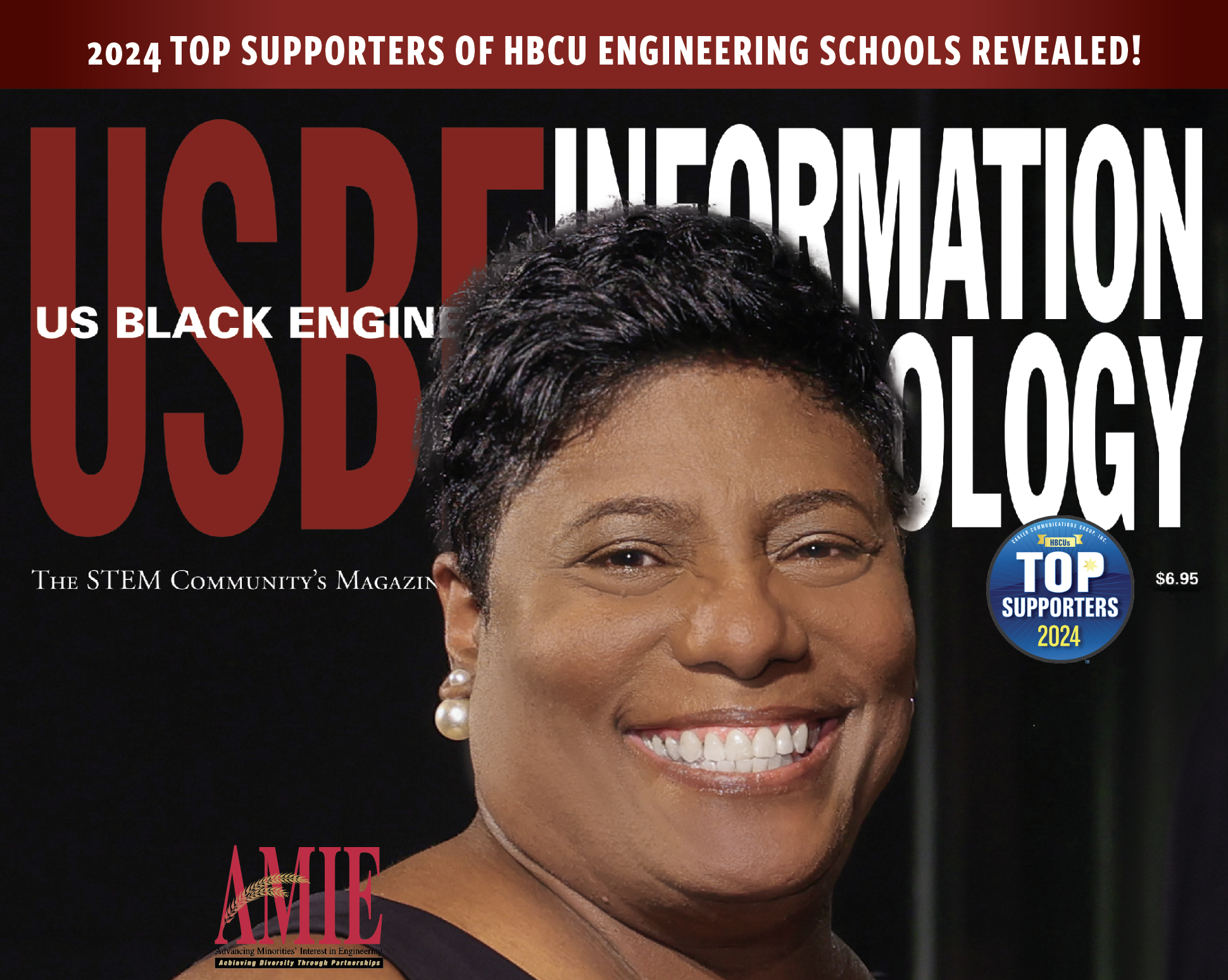
Myron L. Hardiman, P.E., executive director of Advancing Minorities Interests in Engineering (AMIE), has been a key player in recruiting minority engineers. He established recruiting programs at North Carolina A&T, Tuskegee University, and Prairie View for Eli Lilly & Company, where he retired after a 32-year career.
For the past four years, he has served as liaison between engineering schools of ABET-accredited HBCUs and AMIE’s board of directors, composed of corporate, government, and academic representatives.
USBE&IT: What news came out of AMIE's last annual conference?
Myron Hardiman: The good news is the continuing partnership between our members and HBCU engineering schools. AMIE’s primary mission is to facilitate partnerships between our member organizations and HBCU engineering schools. Many corporations have relationships where they will come to career fairs at HBCUs, set up recruiting schedules, and recruit students, and their expectation is to walk away with the best and brightest students. What we try to do, via our partnerships, is position our member organizations to become employers of choice at the HBCUs they want to partner with. We get them to invest in a long-term relationship, and we are not just talking dollars and cents. We are talking about long-term, win-win relationships, which benefit the corporations, agencies, HBCU programs, and students.
Partnerships could include summer internships, scholarships, equipment donations, faculty internships research projects, and pre-college programs. Different companies do different things. Most organizations supervise summer internships. In terms of scholarships, HDR [an architectural, engineering and consulting firm ranked nineteenth among Engineering News-Record's 2005 "Top 500 Design Firms"] provides scholarships at Morgan State University and Hampton University, and the scholarships are also tied to internships.
USBE: Can you tell us more about the Army Corps of Engineers' Internship program?
MH: The Army Corps of Engineers has been a longtime partner of AMIE, and we have an umbrella partnership with the Corps that covers all domestic districts. … Our office coordinates the internship engineering program for HBCU engineering schools, and through that, we have been able to help the Corps in their selection and placement of students from HBCU engineering schools find internship opportunities in locations as diverse as Germany, Korea, Alaska, Japan, and Hawaii. We have provided not only a valuable work experience with the Corps and its engineers, but also opportunities for students to interact and get involved with a culture that is significantly different from one that they are familiar with---which is a broadening experience for anybody.
USBE: What makes AMIE different from other minority engineering organizations?
MH: We're all … trying to get more minority engineering students into the technical work force. AMIE has its unique niche. We are not in competition as much as complementing each other's different niches under that total umbrella. NACME [National Action Council for Minorities in Engineering] provides scholarships and does a great job in identifying trends in the minority engineering education arena; NSBE [National Society of Black Engineers] obviously is an organization that does a great job in supporting students majoring in engineering at any engineering program. AMIE is a coalition of ABET-accredited HBCU engineering schools, and our focus is bringing public–private partnerships to 10---soon to be 11---HBCU engineering schools. Those 10 schools, out of 350 plus engineering schools in the country, produce more than 25 percent of the African-American engineering graduates every year. They are a tremendous pool of minority engineering resource and talent.
Each year, the HBCU deans cosponsor the Black Engineer of the Year Awards (BEYA) conference. The Deans Roundtable at BEYA is an opportunity for the 10 or 11 deans to come together, talk about current issues, and let conference attendees to hear about their programs.
A virtual spokesperson for black technology, BlackEngineer aspires to serve as leading news and information provider on the advancements in black technology with deep insights into black engineering, black entrepreneurs, black education, and historically black colleges and universities (HBCU). In fact, BlackEngineer is one of the very few to promote the achievements of black technology. The Black engineer of the year awards (BEYA) is one of our successful ventures to promote black technology, progress and achievements made in black technology, and the sentiments of the Black community in the US, the UK, Caribbean, and Africa.
Black technology entrepreneurs are increasingly providing the horsepower that drives the global economy. Over the last two decades, black entrepreneurs have created more jobs, and contributed much more to the economic expansion of the Black community as a whole, than any black pastor or politician. Black entrepreneurs are taking risks and building businesses that generate economic growth and increase prosperity in underserved areas, as more minority-owned and minority-focused businesses emerge, willing to serve the financial needs of Black entrepreneurs. US Black Engineer & Information Technology magazine's annual list of Top Black Technology Entrepreneurs reflects the expanding scope of leading Black entrepreneurs in information technology, homeland security, and defense.